Where to buy
Carried by Amazon in every market, Barnes & Noble, Walmart, Waterstones, Booktopia, Kinokuniya, Flipkart, Google Books, Apple Books and Kobo. Printed on demand close to wherever it is ordered.
Listed with the worldwide trade network, so any bookstore or library can order it. Ask for it by ISBN: 978-1957456584 (paperback) or 978-1957456607 (hardcover).
What is inside
How can organisations design workplaces that meet the evolving needs of multiple generations while fostering collaboration, productivity, and employee well-being?
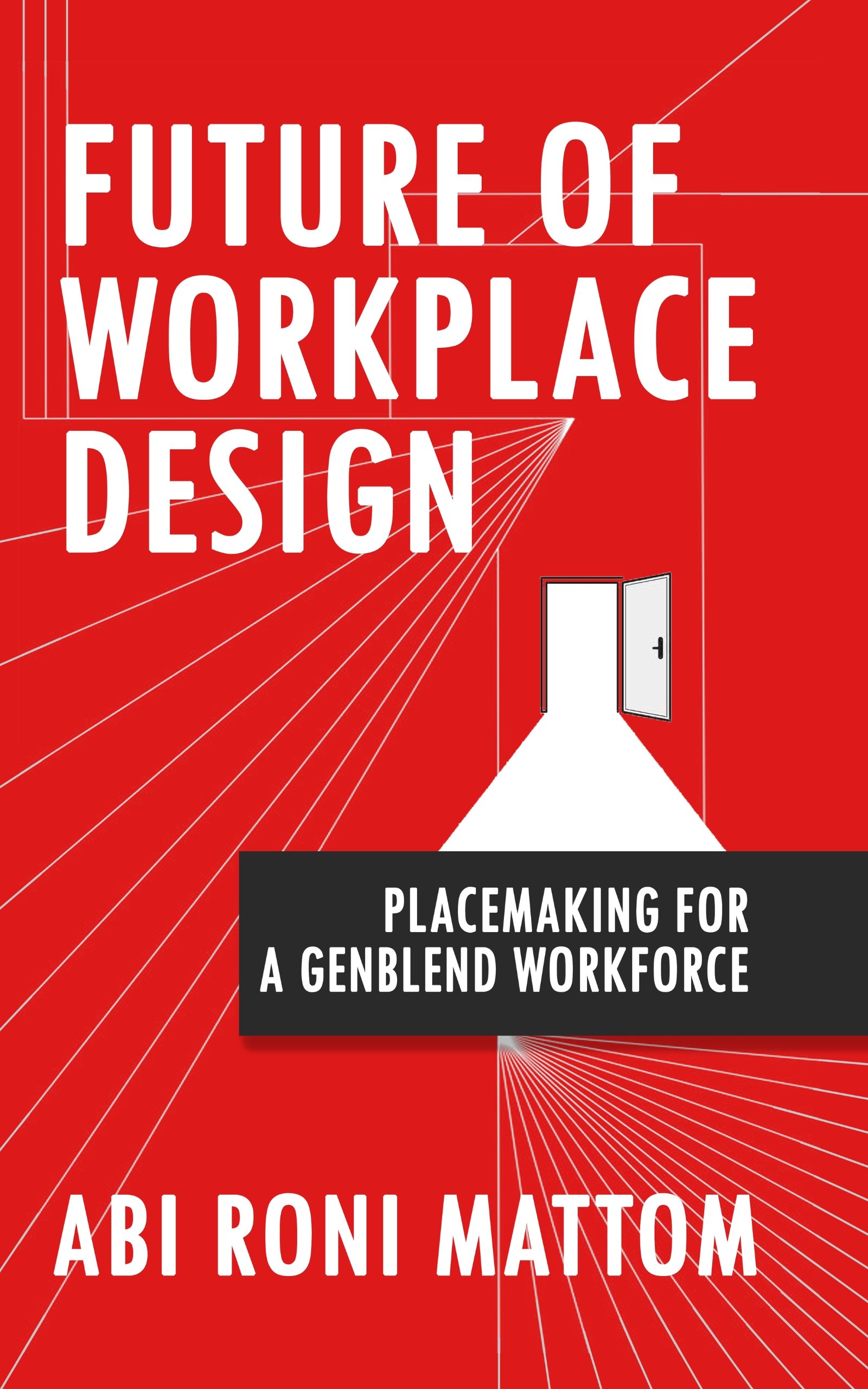
The modern workplace is undergoing a fundamental transformation. With Generation X, Millennials, and Generation Z working alongside one another, organisations must rethink traditional office environments to accommodate different expectations, working styles, and technological preferences.
In Future of Workplace Design, Abi Roni Mattom explores how thoughtful workplace design can bridge generational differences and create adaptable, inclusive, and people-centric environments.
Drawing on over a decade of experience in corporate real estate, extensive research, industry insights, and real-world projects, Abi examines the changing relationship between employees, technology, and the physical workplace.
The book explores the challenges of managing a multigenerational workforce and highlights how organisations can develop spaces that encourage collaboration, creativity, and meaningful connections.
It introduces concepts such as hyper-flexibility, agile work environments, hybrid working models, and purpose-driven workplace design. Readers will discover how flexible layouts, digital integration, and personalised workspaces can support evolving business requirements.
The book also examines the importance of employee well-being, exploring how ergonomics, lighting, acoustics, biophilic design, and inclusive spaces contribute to healthier workplace experiences.
Through practical strategies and industry case studies, Abi demonstrates how organisations can rethink existing workplaces and create environments that remain relevant as workforce expectations continue to evolve.
Who is this book for?
Future of Workplace Design is written for corporate real estate professionals, architects, workplace designers, facility managers, and project managers responsible for planning and transforming office environments.
It is equally relevant to business leaders, HR professionals, real estate developers, and workplace strategists seeking to improve employee engagement and align workplace investments with organisational goals.
Students and professionals interested in architecture, workplace innovation, and the future of work will also find valuable insights.
The book offers a practical perspective on creating workplaces that balance business objectives with human needs, helping organisations build adaptable environments for a diverse and evolving workforce.
Excerpt
From “Understanding Generations: Unraveling the Workforce”
Imagine being surrounded by sun, sand, and sea on a picturesque island, sipping your favorite drink and creating a presentation. The next day, you’re in the scenic hills of Manali, curled up in a blanket and submitting the day’s work report to your supervisor.
“But wait, don’t people normally work from an office and not a hotel room halfway around the world?” Well, thanks to the aftereffects of the pandemic, not anymore! Welcome to an era of hyper flexibility, where you only need a laptop and an internet connection to complete all your professional tasks without being confined to a stereotypical office space! Workplaces are becoming increasingly adaptive to hyper flexibility and the novel working methods embraced by the millennial and Gen Z generations.
This chapter explores the concept of hyper-flexibility in the workplace and highlights the importance of designing spaces that accommodate new ways of working. It aims to provide insights into strategies for creating an environment that supports dynamic work practices, enhances collaboration, and promotes employee well-being.
What exactly is hyper flexibility?
In the pre-pandemic era, the concept of a workplace would only bring up images of a cubicle or a drab office, and it was absolutely necessary for employees to be physically present for a significant portion of their work hours. The landscape has undergone a seismic shift, and now work is not confined to a specific location - it can unfold at the office, in the comfort of one’s home, virtually anywhere in between.
With the advent of Work-From-Home culture post-pandemic, employees soon realized that the H in WFH could stand for Hotel, Hawaii, or even the Himalayas! The latest H to take the professional realm by storm worldwide is Hyper flexibility, and you must have already formed an idea of what it is all about.
Unlike the traditional work setup where employers dictate the terms and conditions, hyper-flexibility empowers modern professionals to craft their jobs around their lifestyles. In this brave new world, the employees hold the reins, steering the direction of their professional journey.
They are no longer passive recipients of workplace norms; instead, they actively participate in defining what work means to them and how it should seamlessly blend with their lives.
The paradigm has flipped; it is no longer a case of fitting life into the contours of work, but rather, tailoring work to integrate into the fabric of one’s life seamlessly.
This paradigm shift acknowledges employees’ diverse needs and preferences and recognizes that productivity is not bound to a specific physical location. The WFH culture, once a temporary response to a crisis, has evolved into a dynamic force reshaping the very foundations of the professional landscape.
When people have control over when, where, and how they work, they are more likely to feel empowered and engaged in their roles, resulting in higher job satisfaction and motivation.
Trailer
About the author

Country Director, Unispace · Bangalore, India
“I enjoyed working with Stardom Books. Their team has a clear process and guides aspiring authors through turning new ideas into a book while helping professionals manage their day.”
Abi is a corporate real estate leader with over a decade of experience at M Moser Associates and Unispace. He leads Unispace India, creating adaptable workplace solutions shaped by business needs and younger generations.
Published by Stardom Books — written from the author’s own words, in the author’s name. Browse the catalogue
Start here
The Authority Quotient is a thirty-minute evaluation that measures your authority two ways — how you rate yourself, and what a stranger can verify — and ends with one specific recommendation, including which type of book is yours.
Find your Authority QuotientNo cost. Get detailed report. Includes specific recommendations.