Where to buy
Carried by Amazon in every market, Barnes & Noble, Walmart, Waterstones, Booktopia, Kinokuniya, Flipkart, Google Books, Apple Books and Kobo. Printed on demand close to wherever it is ordered.
Listed with the worldwide trade network, so any bookstore or library can order it. Ask for it by ISBN: 978-1957456959 (paperback) or 978-1957456942 (hardcover).
What is inside
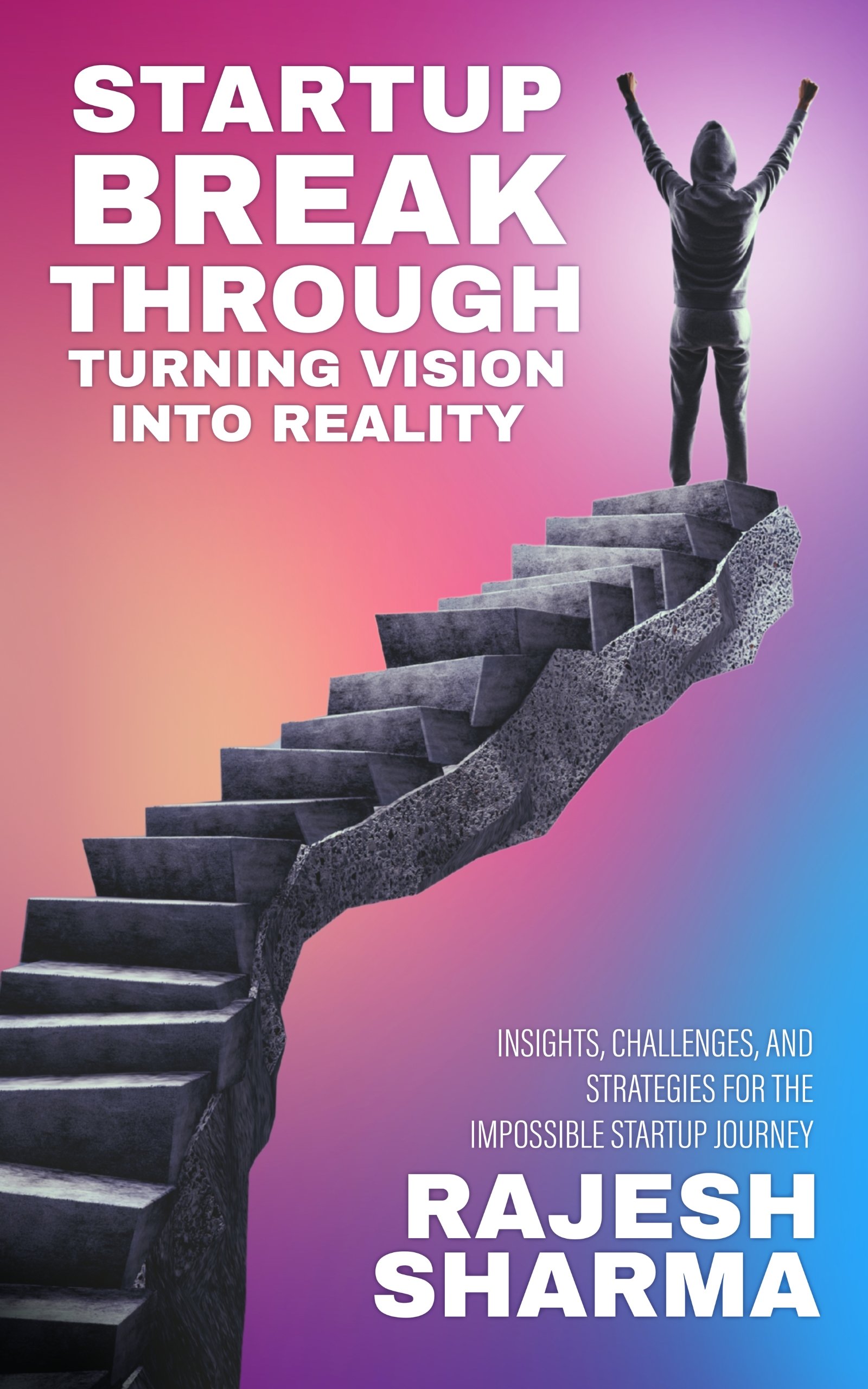
In The Impossible Startup, Rajesh Sharma explores the realities of entrepreneurship, challenging the belief that successful companies are built on perfect ideas, extraordinary backgrounds, or flawless execution. Drawing on his experience as a first-generation entrepreneur and co-founder of ProHance, he offers a practical perspective on building a business from the ground up
.
The book takes readers through the essential stages of the startup journey, beginning with the power of belief and the importance of taking small, meaningful steps. It examines how early validation and customer feedback help founders test assumptions, refine their ideas, and avoid costly mistakes.
Readers discover why creating value must come before seeking returns, how market realities influence business decisions, and why building the right team is critical to long-term progress.
The book also addresses financial discipline, navigating doubt and setbacks, and the challenges of scaling a business without losing sight of its purpose.
Rather than presenting entrepreneurship as a straightforward path to success, Rajesh highlights the importance of continuous learning, adaptability, and disciplined execution. He encourages readers to recognise when to persist, when to change direction, and how to make informed decisions amid uncertainty.
The Impossible Startup is written for aspiring entrepreneurs, first-time founders, startup professionals, business owners, and corporate professionals considering an entrepreneurial journey. It is equally relevant to students and innovators who want to understand what happens between having an idea and building a sustainable business.
At its heart, the book offers a grounded perspective on entrepreneurship: meaningful businesses are built through belief, customer understanding, consistent action, and the willingness to keep learning.The journey begins not with a perfect plan, but with the decision to take the first step.
Excerpt
From “The Power of Belief”
What do all successful entrepreneurs have in common? It’s not just a brilliant idea or a perfect plan but an unshakable belief in what they’re building, even when the world doubts them. Belief sustains entrepreneurs through the difficult “Zero to One” phase and inspires others to follow them on their journey.
Belief as the Bedrock of Success
There’s a line people often use to try to motivate us to follow through with decisions or tasks: “If you don’t, who will?” This phrase has been used in countless situations and contexts, but here, it means just one thing: “If you don’t believe in your idea, who will?”
Most of the time, when we have ideas that go against the grain or don’t exist yet they’re met with more skepticism than excitement.
People don’t want to invest in something that feels unsteady, that doesn’t guarantee profit, or that can’t assure them of security.
But that skepticism is one of the core reasons an idea falls apart. When you constantly wonder, “Will this really work?” you begin to cut corners and not put your heart and soul into it. Then you’re “surprised” when it all collapses.
This is why belief is so important it acts as the core that holds everything together, especially when external support is lacking.
It’s not easy to hold strong to an idea, and it’s even harder when no one around you believes in it.
But that didn’t stop Konosuke Matsushita, the man behind Panasonic, who, mind you, didn’t exactly start with his pockets full. Born as the youngest of eight children to a wealthy landowning family in an agricultural region, Matsushita’s life definitely started comfortably. However, when he was four years old, his father made a series of unsuccessful speculations on the rice markets and went bankrupt. As a result, he lost all his land and the family home. The family was torn apart, the children had to scramble to make a living however they could, and Matsushita left home at the young age of nine to look for work.
When he realized that the electrical business would take the world by storm, he left his apprenticeship at a bicycle shop at 15 to join the Osaka Electric Light Company as an electrician.
As he steadily climbed the ranks in electrical work, he couldn’t help but tinker with parts on the side. Eventually, he found himself sitting in front of an improved electrical socket he had designed and believed would revolutionize appliances.
When his innovation was consistently brushed off and disregarded, Matsushita left the company and became an entrepreneur.
Trailer
About the author

Co-Founder, Prohance · Bangalore, India
“Stardom Books helped me organise my thoughts and turn my knowledge into a book. Their structured process made me reflect deeply and share my learnings with a much wider audience”
Rajesh Sharma, a first-generation entrepreneur and co-founder of ProHance, brings 20+ years of experience across industries. His journey from HPCL to building a global SaaS company offers practical lessons for founders.
Published by Stardom Books — written from the author’s own words, in the author’s name. Browse the catalogue
Start here
The Authority Quotient is a thirty-minute evaluation that measures your authority two ways — how you rate yourself, and what a stranger can verify — and ends with one specific recommendation, including which type of book is yours.
Find your Authority QuotientNo cost. Get detailed report. Includes specific recommendations.